Threat intelligence without asset context is just a news feed

Shimon Tzahi
Principal Product Manager, Axonius

Roey Vilnai
Director, Cyber Research, Axonius

Adir Schlezinger
Senior Backend Engineer, Axonius
This blog is part of Why We Built It, a series on the gaps in exposure management that security pros are still stuck solving by hand, and what we built to close them:
|
Your threat intelligence feed says a CVE is under active exploitation. It doesn’t say whether you run an asset exposed to it, how important that asset is to the business, or what controls already sit in front of it. Threat intelligence on its own ranks the world, but not "in your world."
And many teams don't even get that far. Getting external signals usually means buying, integrating, and maintaining a dedicated threat intelligence feed. That's enough friction that many teams skip it entirely and prioritize with less than they know they need.
How to fuse threat intelligence to your asset context
To solve that, we built Axonius Threat Intelligence to deliver threat intel at the vulnerability and asset level for any Axonius Exposures customer at no extra cost, without extra setup. Turn on Exposures, and the signal is already there, sitting next to every finding.
The mechanism has two parts:
The signal. Exploitation intelligence: whether a vulnerability is being actively exploited, by which threat groups, against which targets, and how widespread the activity has become.
The join. Every signal is fused to both the security findings and assets in Axonius. The platform knows which of your assets the exploited vulnerability touches, which of those assets attackers may go after the most, and what impact it may cause based on asset and business context.
The data stays current on its own. Axonius syncs threat intelligence as part of the regular discovery cycle, so every finding carries the latest exploitation context the next time the environment is assessed. The signal also flows into all platform components (including the Axonius Risk Score, Dashboards, Queries, Workflows, and Enforcement Actions). The entire stack stays current as the threat landscape shifts.
When a real threat emerges, having that signal already in place matters:
"Being able to get near-instantaneous information on how many assets are susceptible to a 0-day vuln, who owns them, are they externally exposed, etc., is pivotal to timely response and communication." – Geoff Krahn, Director of Product and Platform Security, Lumen Technologies
Why we built Axonius Threat Intelligence
Axonius Threat Intelligence exists to make threat intel a default for any exposure management program. Simply put: the signal should already be there when you need it — ready for use, and linked to both security findings and assets.
Two decisions shape how we built Axonius Threat Intelligence:
Exploitation comes with the finding: You shouldn't need a separate contract to know if a finding is being exploited. When a new exploit campaign hits, the finding ranking should shift the same day, in the same view your remediators already use, without anyone wiring up a new feed.
Threat signals must link to assets (not only vulnerabilities): A feed shouldn't make you do the join yourself. Knowing a CVE is under active exploitation is half the answer. The other half is looking at it as a critical asset and understanding all external threats to it that may impact the business. This triangulation only works if exploitation data, vulnerabilities, asset data, and business context land in the same place. We do that automatically.
Axonius Threat Intelligence follows the same design principles as the rest of Axonius Exposures: turnkey for security teams, ready to fit into your existing program.
Get started with Axonius Threat Intelligence
To get started with Axonius Threat Intelligence, access your Axonius Dashboard and open any aggregated security finding. Exploitation signals are detailed from there (no setup required).
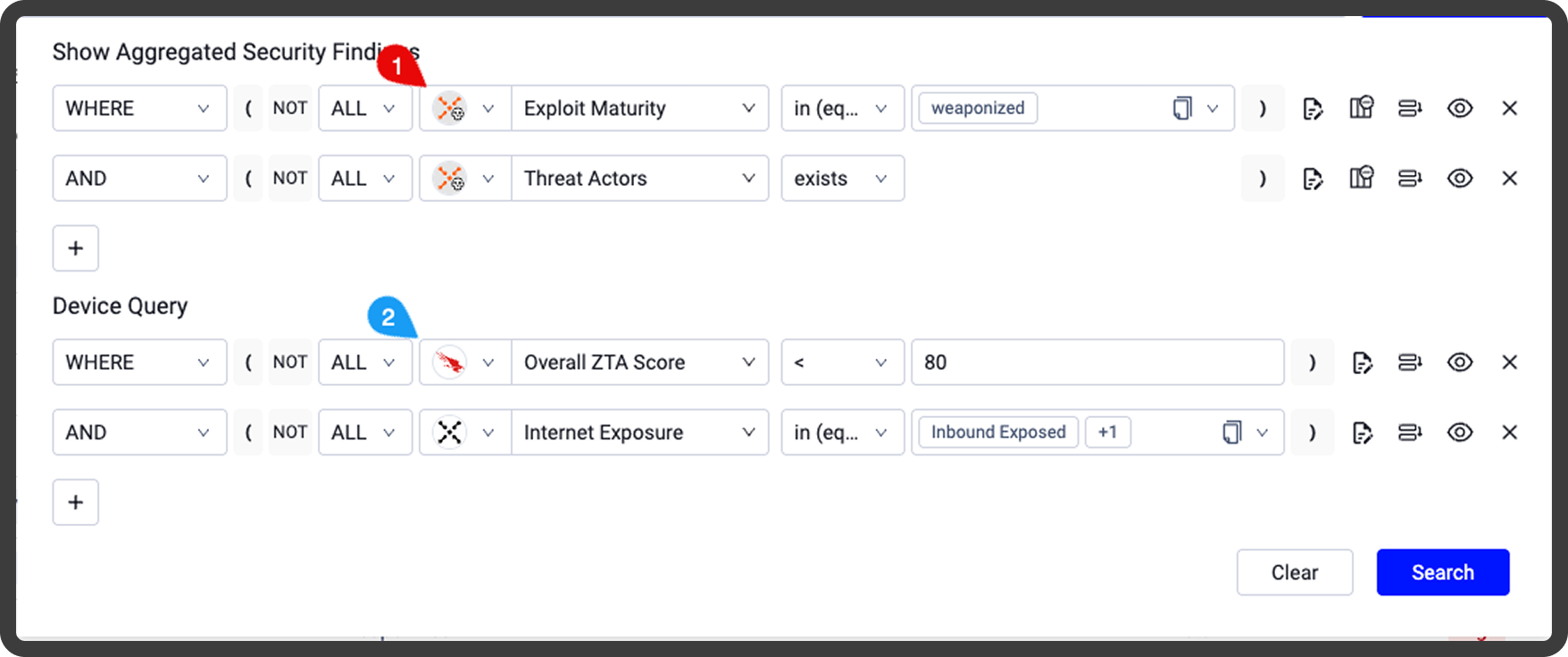
To surface threat intelligence signals alongside your assets, security findings, or dashboards, use relationship queries scoped to the signals you care about. Here's an example of critical production systems targeted by threat actors:
If you're not an Axonius Exposures customer yet, have specific questions, or want to explore Axonius Exposures in depth, book a personalized demo with us.
Categories
- Threats Vulnerabilities

Get Started
See how to make asset intelligence actionable with a guided demo:
- Stop chasing data — work from one asset model your entire team can trust.
- See what's exposed before it's a problem — surface coverage gaps automatically.
- Turn alert noise into action — cut thousands of alerts down, to the ones that matter.